

Asbestos Testing Montreal
Asbestos characterization before renovation or demolition, compliant with the RSST and BNQ 2013-040 standard.
Was your building built or renovated before 1990? The law requires you to have materials that may contain asbestos characterized before undertaking renovation, repair, or demolition work.
Radar Inspection performs asbestos testing in Montreal, with safe sampling and accredited lab analysis.
Request your free quote — 514-550-2444 | info@radarinspection.com
What the service includes
- Preliminary building assessment (construction year, history, suspect materials)
- Targeted, safe sampling following the BNQ 2013-040 standard
- Accredited lab analysis (optical or electron microscopy)
- Laboratory results certificate with recommendations
- Clear recommendations before starting work
- Support building your ACM register
Price Calculator
Choose the service you need and estimate the price based on your needs.
Results delivered within 7 business days
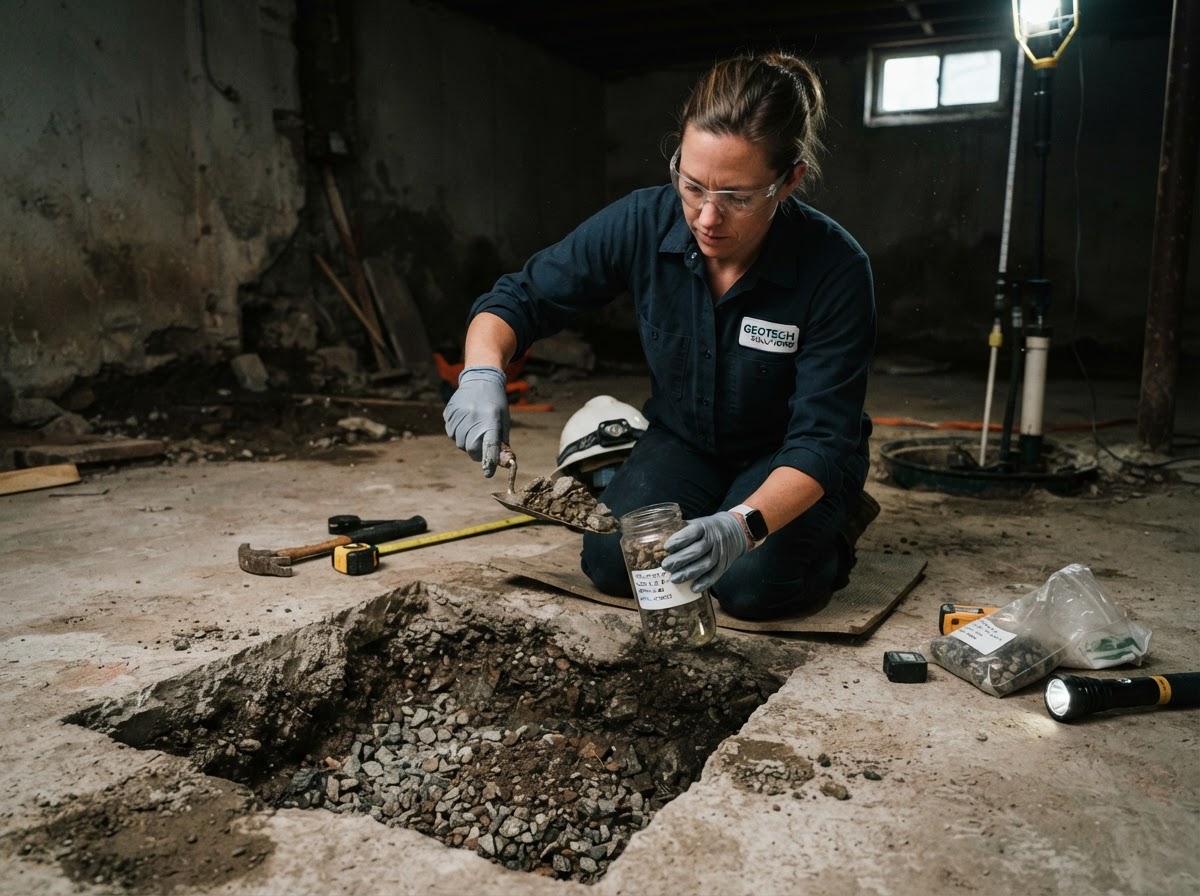
Targeted sampling of suspect materials — plaster, joint compound, textured finishes, pipe insulation, floor tiles — confirms in the lab whether asbestos fibers are present before renovation or demolition work.
- Identification of suspect materials
- Safe on-site sampling
- Accredited lab analysis
- Laboratory results certificate
Estimated price
CA$235.00
- Standard materials testing
- 1 sample · CA$235.00
- GST (5%)CA$11.75
- QST (9.975%)CA$23.44
- TotalCA$270.19
Book directly based on our availability.
What the Law Requires in Quebec
Asbestos management in Quebec is governed by the Regulation respecting occupational health and safety (RSST), notably section 3.23.7, which requires characterization of materials before any work likely to disturb asbestos. Sampling must be performed according to recognized protocols, including the BNQ 2013-040 standard.
- Buildings affected: built or majority-renovated before 1990 — asbestos was widely used in building materials up to that period
- Mandatory register: employers must keep a register of asbestos-containing materials (ACM) for any building built before 1990 (and in some cases before 1999), keep it updated, and communicate it to workers who may be exposed
- Accidental discovery: if asbestos is discovered unexpectedly during work, the law requires an immediate work stoppage (RSST, s. 69) pending assessment
- Without a lab test, it's impossible to visually confirm whether a material contains asbestos fibers
Where Is Asbestos Found in a Building?
- Pipe insulation (lagging)
- Sprayed-on fireproofing on steel structures or ceilings
- Acoustic ceiling tiles
- Flooring (vinyl tiles, adhesives)
- Mortars, stucco, and textured coatings
- Vermiculite used as loose-fill attic insulation — some came from a contaminated deposit and may contain asbestos, without being visually distinguishable
Consequences of Non-Compliance
Ignoring this obligation exposes the owner or contractor to CNESST fines, a work stoppage, and above all a real risk of exposing workers and occupants to a recognized carcinogen.
Why Radar Inspection
- Comply with a legal obligation before renovation or demolition
- Protect the health of workers, occupants, and contractors — exposure can cause asbestosis, lung cancer, or mesothelioma, often decades later
- Avoid a costly work stoppage from an unplanned discovery
- Properly plan the work and decontamination budget if necessary
- Build or update your register of asbestos-containing materials (ACM), as required by regulation

Our process
Preliminary building assessment
Construction year, renovation history, visible suspect materials.
Targeted, safe sampling
Following the BNQ 2013-040 standard protocols, on materials likely to contain asbestos.
Accredited lab analysis
Optical or electron microscopy, to confirm the presence of asbestos fibers.
Laboratory results certificate
Confirmation of the presence of asbestos fibers and recommendations on how to proceed.
Clear recommendations
On how to proceed before starting your work.
Frequently asked questions
Related services



Ready to book your asbestos testing?
Asbestos characterization before renovation or demolition, compliant with the RSST and BNQ 2013-040 standard.